
Introduction
One of the most common review procedures undertaken by GST authorities is the comparison of turnover reported in GST returns with turnover disclosed in financial statements. With increasing use of data analytics and automated compliance tools, even minor inconsistencies can attract departmental attention.
While turnover differences are not always indicative of non-compliance, businesses must be able to explain and support such variances with proper documentation and reconciliations.
Common Reasons for Turnover Differences
Several legitimate reasons may result in differences between GST returns and financial statements, including:
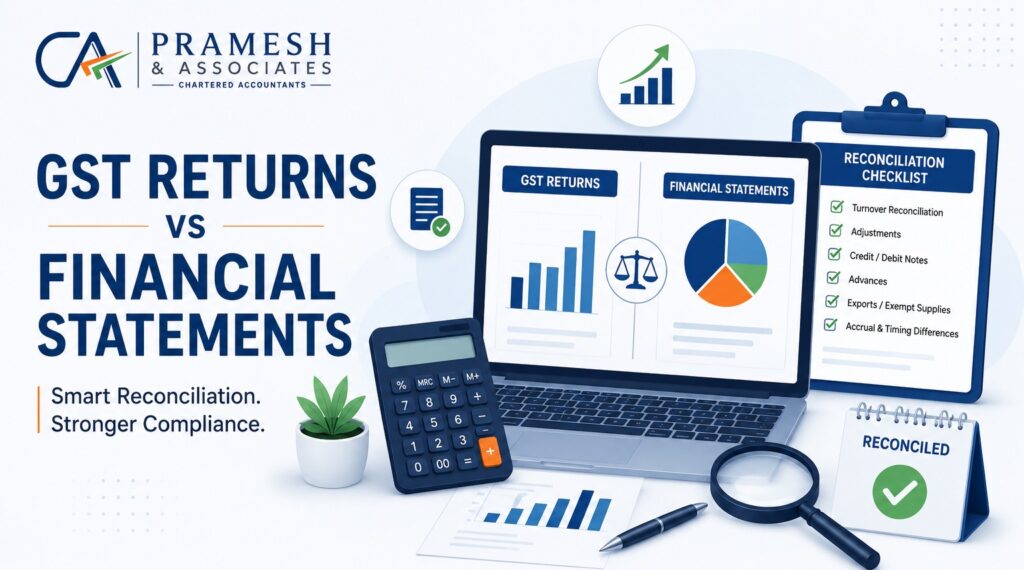
- Timing differences in revenue recognition
- Advances received and adjusted in subsequent periods
- Credit notes and debit note adjustments
- Non-GST income reported in financial statements
- Accounting entries and year-end adjustments
- Export transactions and exempt supplies
- Differences arising from accrual and tax reporting requirements
Understanding the nature of these differences is essential before responding to any departmental inquiry.
Risks of Unexplained Differences
When turnover variances are not properly reconciled, businesses may face:
- GST notices and inquiries
- Detailed departmental scrutiny
- Demand and assessment proceedings
- Additional compliance costs
- Interest and penalty exposure in certain cases
Authorities generally seek explanations and supporting documents to validate reported figures.
Best Practices for Businesses
To avoid unnecessary disputes, businesses should:
- Conduct annual turnover reconciliation
- Compare GST returns with audited financial statements
- Maintain proper working papers explaining variances
- Document adjustments and accounting entries
- Review return filings before year-end compliance
- Ensure consistency across statutory filings
A well-documented reconciliation process can significantly reduce compliance risks.
Importance of Documentation
Proper documentation is often the key to successfully explaining turnover differences. Businesses should maintain:
- Reconciliation statements
- Supporting accounting records
- Credit note and adjustment details
- Revenue recognition workings
- GST return summaries
These records help establish the validity of reported figures during audits and assessments.
Conclusion
Turnover differences between GST returns and financial statements are among the most common areas examined by tax authorities. Proactive reconciliation, accurate reporting and comprehensive documentation can help businesses address departmental queries confidently and minimize the risk of future disputes.