
Introduction
The Reverse Charge Mechanism (RCM) is an important provision under GST where the liability to pay tax shifts from the supplier to the recipient of goods or services in specified cases. Although RCM has been part of the GST framework since its inception, it continues to be one of the most misunderstood areas of compliance.
Many businesses inadvertently overlook RCM obligations, resulting in tax demands, interest liabilities and avoidable litigation. A proper understanding of RCM applicability and compliance requirements is essential to minimize risks.
Typical Errors Businesses Make
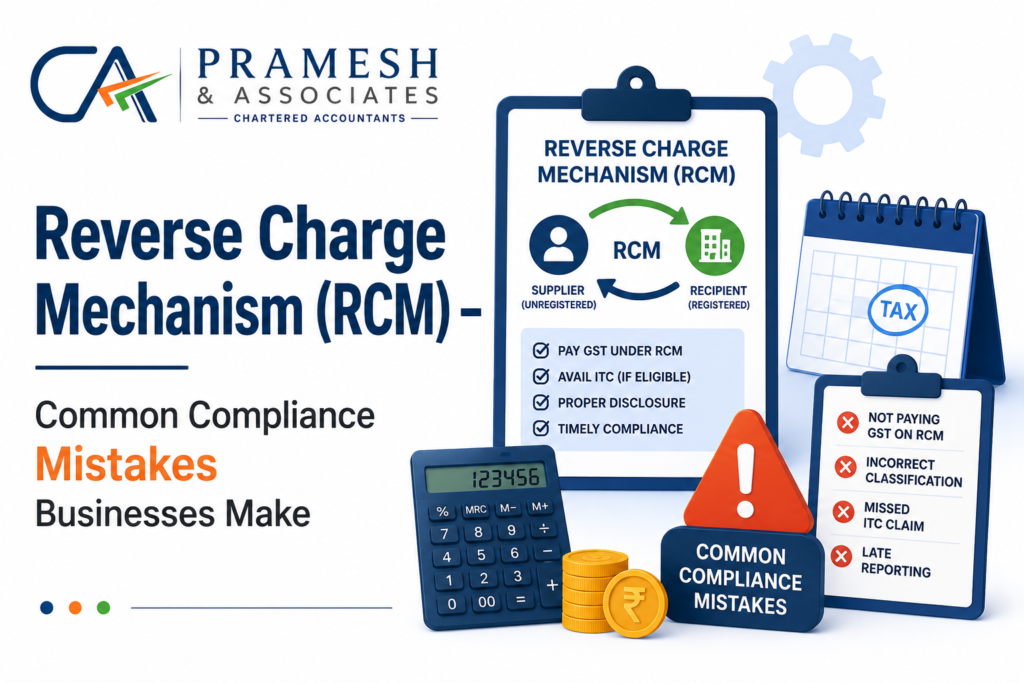
Some of the most common RCM-related mistakes include:
- Failure to identify transactions covered under RCM
- Incorrect reporting of RCM liability in GSTR-3B
- Non-payment or delayed payment of GST under RCM
- Incorrect availment of Input Tax Credit (ITC)
- Lack of proper documentation and record keeping
- Misclassification of vendors and transactions
Even minor compliance lapses can attract scrutiny from tax authorities.
Why Scrutiny Happens
GST authorities regularly analyze financial and GST data to identify potential RCM non-compliance. During audits and assessments, they often compare:
- Purchase records and expense ledgers
- Vendor invoices and agreements
- GST return disclosures
- Tax payment records
- Input Tax Credit claims
Any discrepancy between accounting records and GST filings may trigger departmental inquiries and notices.
Recommended Controls
Businesses can strengthen their RCM compliance by implementing the following controls:
- Conduct monthly RCM applicability reviews
- Classify vendors and transactions correctly
- Ensure timely payment of GST under RCM
- Maintain proper supporting documentation
- Verify reporting in GSTR-3B before filing
- Review ITC eligibility on RCM transactions
- Periodically reconcile books with GST returns
A systematic compliance framework helps reduce errors and improve reporting accuracy.
Benefits of Strong RCM Compliance
Effective RCM management can help businesses:
- Avoid GST notices and disputes
- Reduce interest and penalty exposure
- Improve tax compliance processes
- Strengthen internal controls
- Ensure accurate financial reporting
Proactive compliance is always more cost-effective than resolving disputes after scrutiny.
Conclusion
RCM remains one of the most sensitive areas under GST compliance. Businesses that regularly review transactions, maintain proper documentation and ensure accurate reporting are better positioned to avoid costly disputes and regulatory challenges. A structured RCM compliance process not only reduces risk but also strengthens overall GST governance.