
Introduction
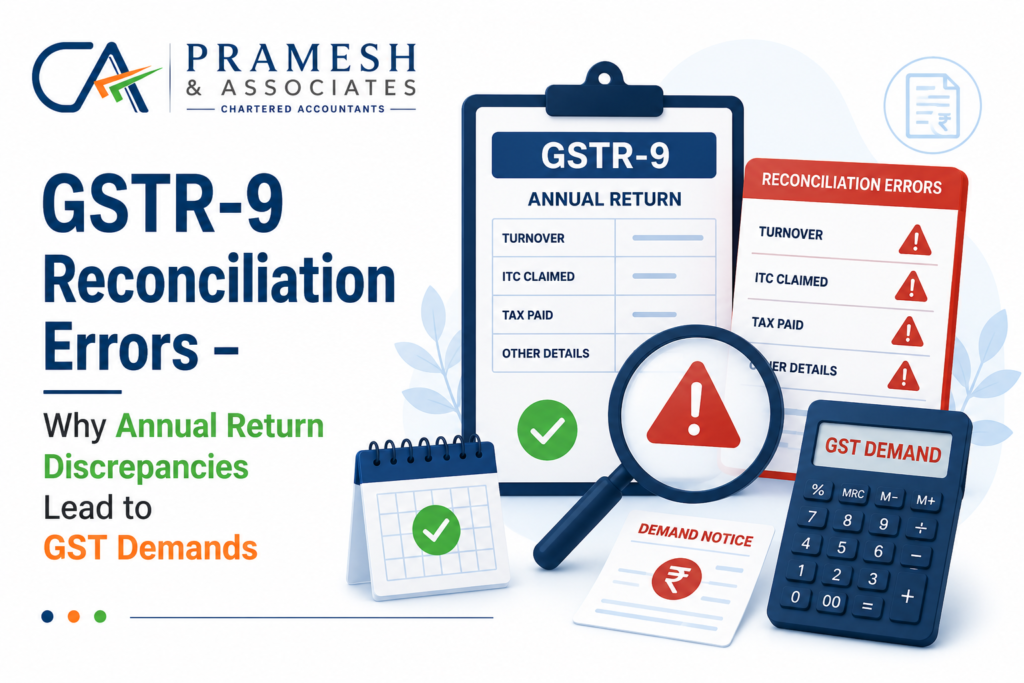
GSTR-9 is an important annual return under GST that summarizes the financial and tax information reported throughout the financial year. While many businesses consider it a routine compliance requirement, tax authorities increasingly use GSTR-9 data for scrutiny, risk assessment and identification of reporting inconsistencies. Any mismatch between annual return data and other GST records may attract departmental inquiries and notices.
Common Areas of Difference
Several discrepancies commonly arise during the preparation and filing of GSTR-9, including:
- Turnover differences between returns and financial statements
- Incorrect reporting of reverse charge transactions
- Variations in Input Tax Credit (ITC) disclosures
- Tax liability adjustments not properly reflected
- Amendments made during the year without adequate reconciliation
- Differences between GST returns and audited financial records
Why Authorities Raise GST Demands
Tax authorities regularly compare GSTR-9 figures with various compliance documents to identify inconsistencies. Key comparisons include:
- GSTR-1 turnover reporting
- GSTR-3B tax liability disclosures
- Audited financial statements
- Books of accounts and supporting records
When significant differences remain unexplained, businesses may face GST notices, assessments or demand proceedings.
How Businesses Can Avoid Issues
To minimize compliance risks, businesses should adopt a structured reconciliation process before filing GSTR-9:
- Perform a detailed annual GST reconciliation
- Match turnover with financial statements
- Verify ITC claimed during the financial year
- Review tax liability adjustments and amendments
- Maintain proper supporting documentation
- Prepare working papers explaining any variances
Conclusion
A properly reconciled GSTR-9 helps ensure accurate reporting and reduces the likelihood of future GST disputes. Timely review of annual return data, supported by adequate documentation and reconciliations, can significantly lower litigation risk and strengthen overall GST compliance.